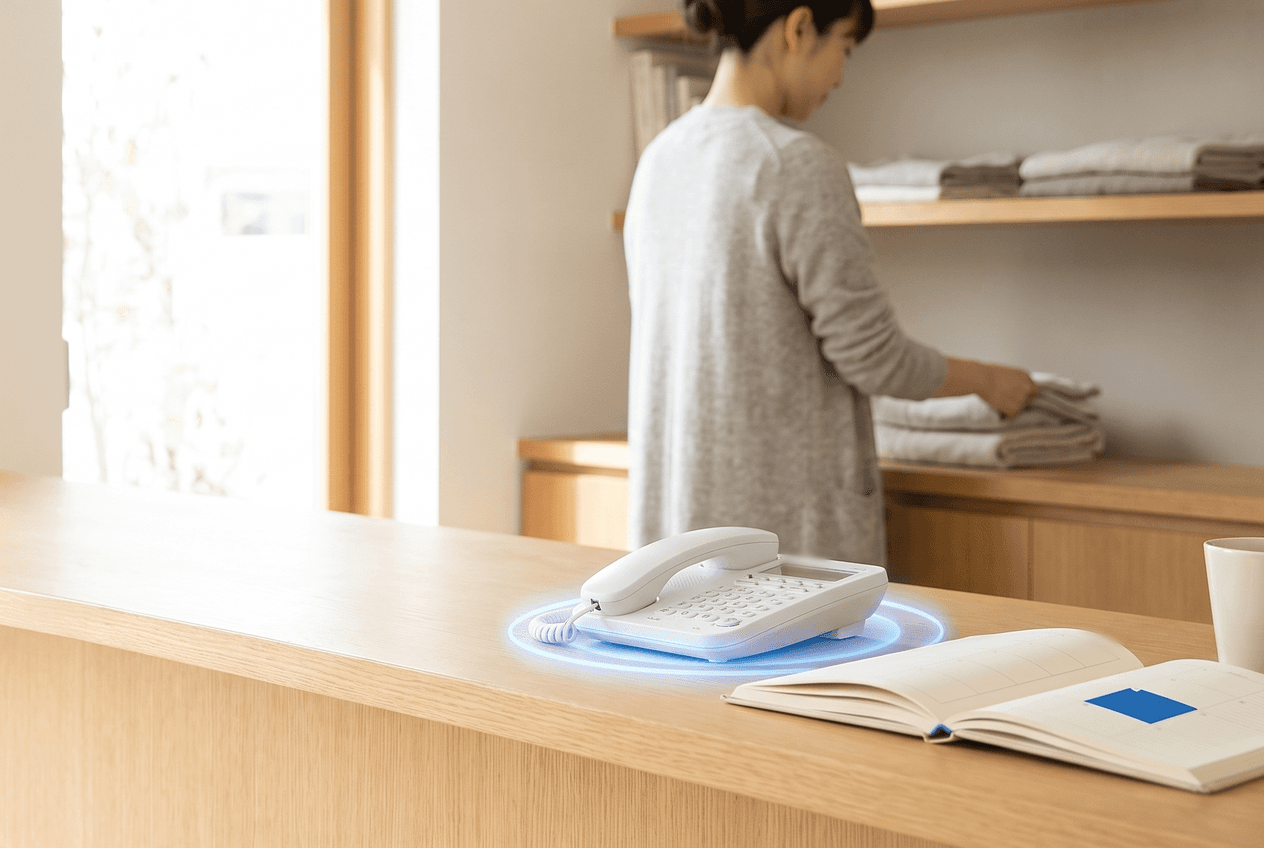
A ringing phone that nobody answers – for many companies, this scenario is part of everyday business. While operations are running, calls go unanswered, customers try again later or turn directly to a competitor. An AI phone assistant for appointment scheduling addresses exactly this point: it takes calls, records the caller's request and schedules appointments without employees having to pick up the receiver themselves. This turns a classic bottleneck into an automated, reliable process. How such an AI phone assistant for appointment scheduling works technically, which advantages it offers and which industries benefit most from it is what this article shows.
How Does an AI Phone Assistant Work for Appointment Scheduling?
An AI phone assistant combines several technologies in order to handle calls independently and purposefully. In the first step, speech recognition takes on the task of understanding the caller's spoken request and converting it into structured information. Building on this, the system checks the availability in the connected calendar and matches open time slots against the desired appointment. This availability check happens in real time, so that suitable appointment suggestions can be offered directly during the conversation.
A typical call follows clearly defined steps: first, the assistant greets the caller and asks about their request. Relevant information such as the desired service, the preferred time frame or any special requirements is then recorded. On this basis, the system suggests suitable appointments and confirms the final selection together with the caller. In the last step, the agreed appointment is automatically entered into the calendar system and an automatic confirmation is sent by SMS or email.
This automated appointment scheduling by phone works regardless of the time of day or how busy the team is. One example of such a solution is the AI service agent for appointment scheduling, which takes calls independently and enters appointments directly into the calendar.
What Advantages Does Automated Appointment Scheduling by Phone Offer?
The central advantage of an AI phone assistant lies in 24/7 accessibility. Calls are answered regardless of opening hours, public holidays or sick leave within the team. For companies, this means noticeable relief for the team, because recurring and time-consuming tasks such as coordinating appointments no longer have to be handled manually. The team gains time for more demanding activities, while phone-based appointment booking runs reliably in the background around the clock.
Missed calls are an underestimated problem for many companies. If a call is not answered, potential customers frequently decide in favor of another provider. You can read about the economic effects unanswered calls can have in our article on the consequences of missed calls for companies. AI-supported call answering counters this effect by answering every call and turning it into a concrete appointment suggestion. In the long term, this can have a positive effect on the number of booked appointments and therefore on revenue.
For industries with urgent requests, what is known as emergency logic is also relevant. Here the assistant recognizes certain signal words or details in the conversation and prioritizes the corresponding requests, for example by forwarding them specifically to the responsible team. This keeps automated appointment scheduling practical even in sensitive contexts.
Which Industries Is an AI Phone Assistant Suitable For?
An AI phone assistant for medical practices can be used particularly well where a high volume of calls meets a limited practice team. Appointment requests, prescription orders and general inquiries can be handled automatically, while urgent matters are prioritized through emergency logic. The situation is similar for an AI phone assistant for dental practices, where regular check-ups and short-notice treatment requests call for a structured phone process.
The benefit is also clear in the care sector: an AI phone assistant for care services can bundle inquiries from relatives, appointment requests and organizational questions without nursing staff being interrupted during their actual work. In the skilled trades, appointment planning for on-site visits is the main focus. An AI phone assistant for craft businesses helps to coordinate customer appointments efficiently and to reduce idle time caused by missed calls.
Service providers with a high volume of calls in particular know the problem of being unreachable during peak times or parallel customer conversations – more on this in our article on the causes of poor phone accessibility. The requirements differ considerably from industry to industry: while practices focus on prioritizing urgent cases, the skilled trades are mainly concerned with distributing appointments efficiently across the working day.
How Can an AI Phone Assistant Be Integrated Into Existing Systems?
For an AI phone assistant to deliver real added value in everyday work, it has to fit seamlessly into existing structures. Calendar integration is the foundation: only if the system has direct access to current availability can appointments be scheduled without follow-up questions or double bookings. In addition, many solutions can be connected to existing ITSM or ESM systems in order to process requests in a structured way and to link processes across the company.
When it comes to data protection, sensitive customer and patient data must be processed in accordance with the requirements of the GDPR. Reputable providers place value on transparent processes and secure data storage, without being able to give blanket guarantees – the specific implementation always depends on the individual system and its configuration.
What such an integration looks like in practice is shown by the Autohaus König case study. There, an AI phone assistant was successfully connected to the existing appointment system, so that incoming calls lead directly to automatic confirmations and a reliable availability check.
AI Phone Assistant for Improving Accessibility
How AI can improve accessibility in customer service is something we have examined in detail in a separate article. Around-the-clock accessibility has long ceased to be a mere comfort feature and has become an increasingly important factor for customer satisfaction. Companies that are hard to reach by phone risk not only individual missed calls, but also the long-term loss of customers to more competitive providers.
An AI phone assistant creates a structural advantage here by ensuring accessibility independently of staffing resources. Besides appointment scheduling, there are further areas of application for AI-supported assistants – you will find an overview in our AI solutions at a glance.
Conclusion & Call to Action
An AI phone assistant for appointment scheduling solves several central challenges at once: it ensures continuous accessibility, relieves employees of recurring tasks and can be integrated into existing calendar and appointment systems. Industries with a high volume of calls, from medical practices through care services to craft businesses, benefit equally from structured, automated call answering. If you too would like to reduce missed calls and organize your appointment scheduling more efficiently, it is worth taking a closer look at the practical implementation.
Test the service agent free of charge
Frequently Asked Questions
How exactly does an AI phone assistant for appointment scheduling work?
The assistant takes incoming calls, records the request via speech recognition, checks availability in the connected calendar and suggests suitable appointments. After confirmation, the appointment is entered automatically and a confirmation is sent by SMS or email.
What costs are involved in an AI phone assistant?
The costs depend on the range of functions, the call volume and the individual system integration. Since requirements differ from company to company and from industry to industry, a personal consultation is advisable in order to receive a suitable offer.
Are there free AI phone assistants for small companies?
Some providers offer a free trial so that the way it works can be explored without obligation. For permanent operation, however, costs usually apply, which depend on the scope and the individual usage.
How secure are customer or patient data in AI appointment scheduling?
Reputable providers process data taking the requirements of the GDPR into account and rely on transparent, traceable processes. The specific implementation should be examined individually in advance and discussed with the respective provider.
Can the AI phone assistant also prioritize urgent requests?
Yes, many systems have an emergency logic that recognizes certain details or signal words and forwards the corresponding requests with priority. This means urgent matters can also be handled appropriately within an automated process.